Travertine & Limestone
Moca Grey Limestone and Silver Travertine get grouped under one name because buyers ask for them together — porosity, not appearance, is what actually separates them.

Grouped by how buyers ask for them, not by how they perform.
Travertine and limestone are both sedimentary, but they don't behave the same way, and putting them on one page reflects how buyers ask for them rather than how they perform. The two materials on this page make the contrast concrete: Moca Grey Limestone reads as a light grey, faintly cream-toned field with fine, cloud-like mottling and very little colour variation from piece to piece, while Silver Travertine — whether vein-cut into a straight linear grain or cross-cut, like the Ivory Travertine above, into its more open, cratered face — carries natural cavities that get filled at the factory or left open depending on the finish.
What both share is a strong dependence on where they end up. The same stone that performs for decades on an interior wall or a covered floor can fail quickly in the wrong exterior condition — freeze-thaw, standing water, deicing salt — because porosity, not hardness, decides how much moisture the material actually takes on.
Five checks, and what each one is actually judged against.
Water absorption and porosity
Absorption is checked against the destination environment before the material ships. A porosity rate that's fine on a covered interior wall can be the wrong choice for an exterior pool surround, and the same stone name doesn't guarantee the same rate batch to batch.
Vein-cut versus cross-cut
Both cuts are checked against the design intent, not treated as interchangeable — vein-cut reads as a linear, wood-like stripe; cross-cut reads as a cloudy, cratered pattern from the same block. Mixing them into one space by accident is a common and avoidable mistake.
Filling — where, with what, how it ages
Fill type and location are confirmed and disclosed before approval. Epoxy, cement-based, or unfilled-and-honed-on-site each age differently, and a fill chosen to save time in the factory can telegraph through the finish within a year.
Edge condition and chipping risk
Edges are checked for chips and hairline cracks before packing. Travertine and limestone chip more readily in handling than granite or dense marble, and edge damage is the most common transit claim on this material.
Weathering behaviour and sealing
Weathering and staining risk are checked against the actual installation environment, and sealing timing — before or after installation — is agreed in writing rather than assumed by either side.
Two stones, checked the same way — on the floor, before packing.
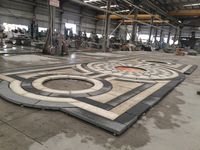
Moca Grey Limestone and Silver Travertine, cut vein and cross, then fabricated and polished.
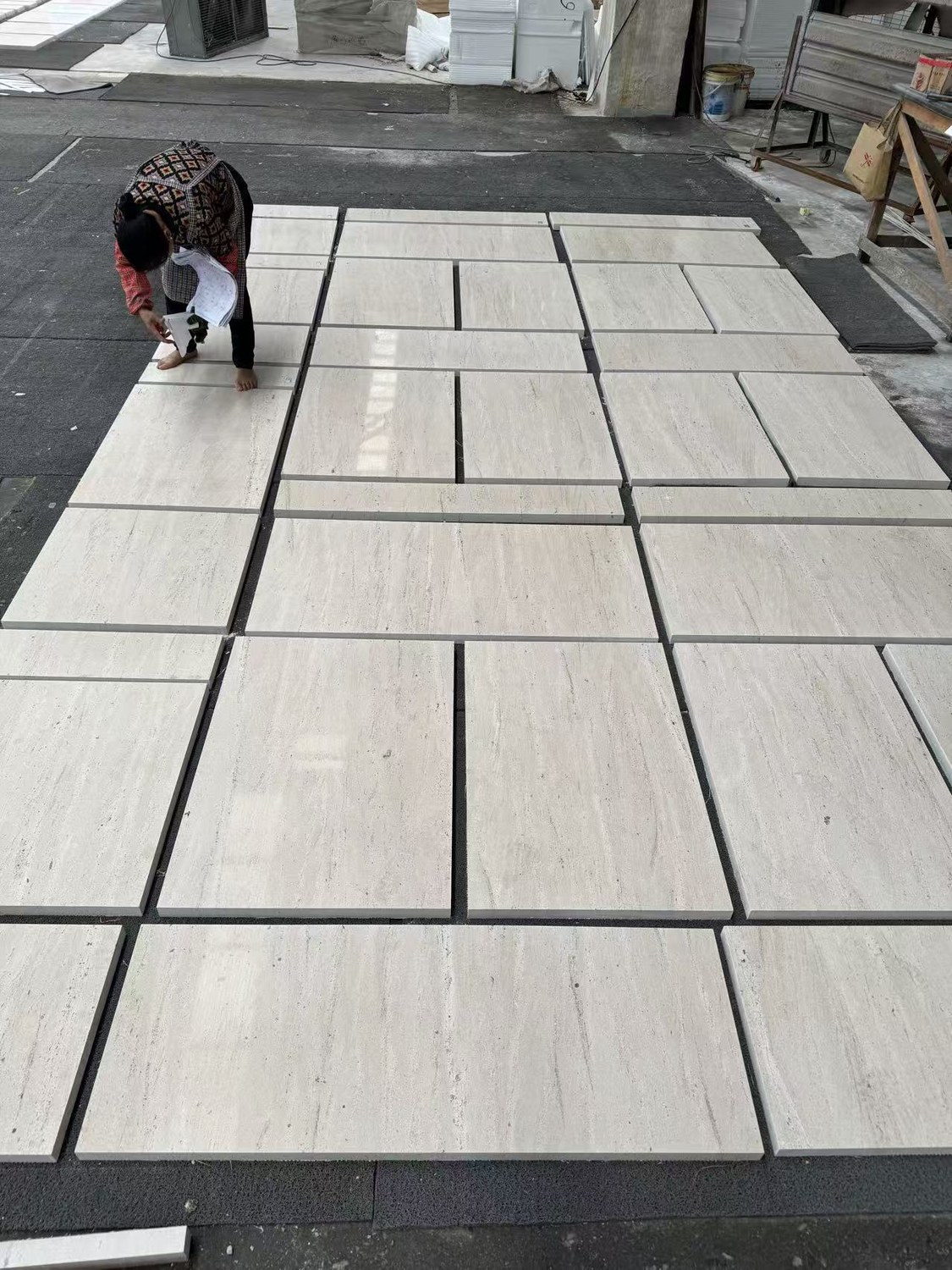
Ivory Travertine, checked against the plan
Closest match: Ivory Travertine, cross-cut — checked against the layout plan before it's crated. The kind of check that catches a misaligned run while it's still on the factory floor, not after installation.
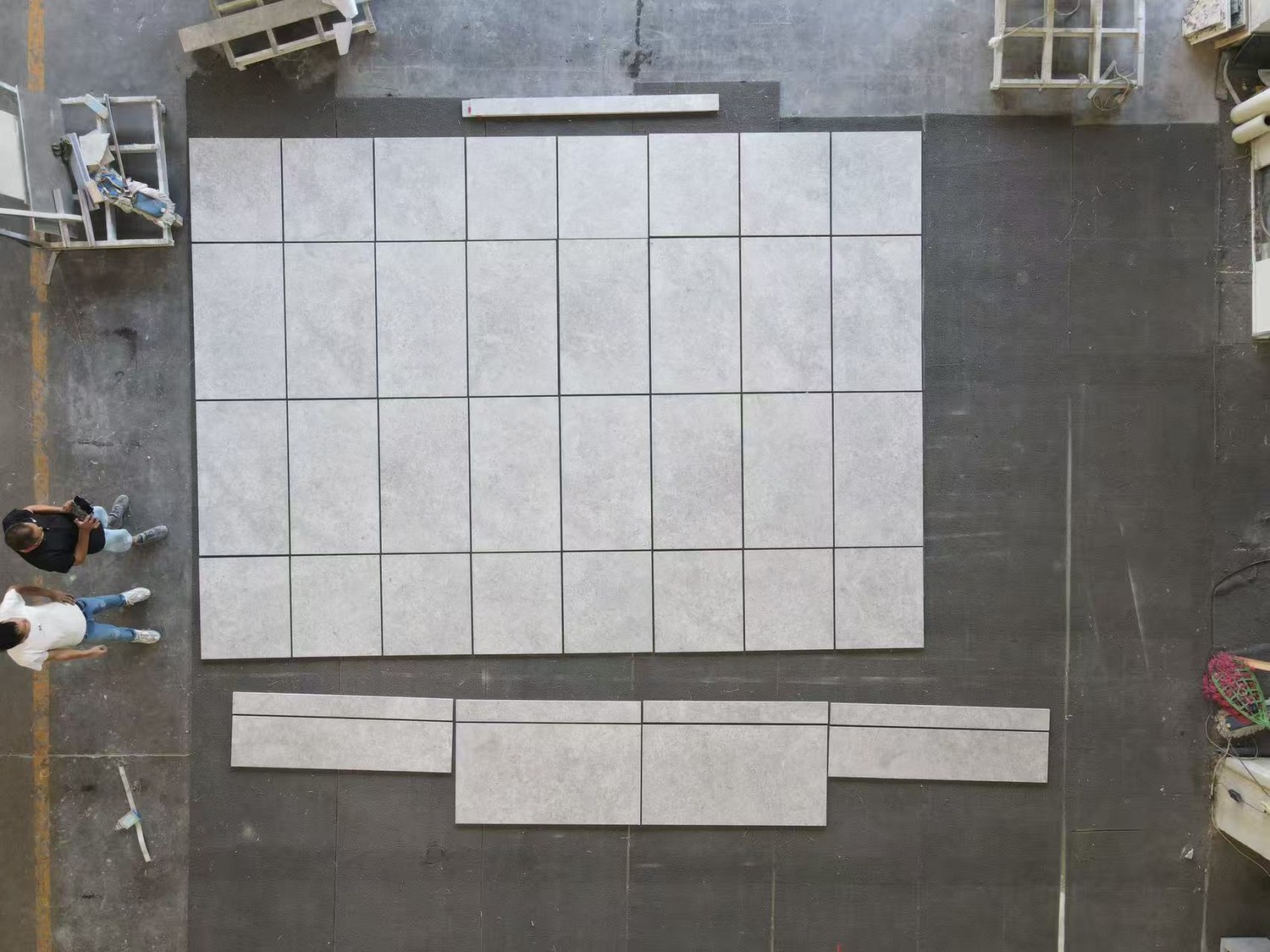
Moca Grey Limestone, laid out to check the run
Moca Grey Limestone — a light grey base with a faint cream undertone, its texture a fine, cloud-like mottling rather than a linear grain, and low colour variation from piece to piece. The full run, field tiles plus the narrower border strips, was laid out together on the floor so tone could be checked across the whole set before packing.
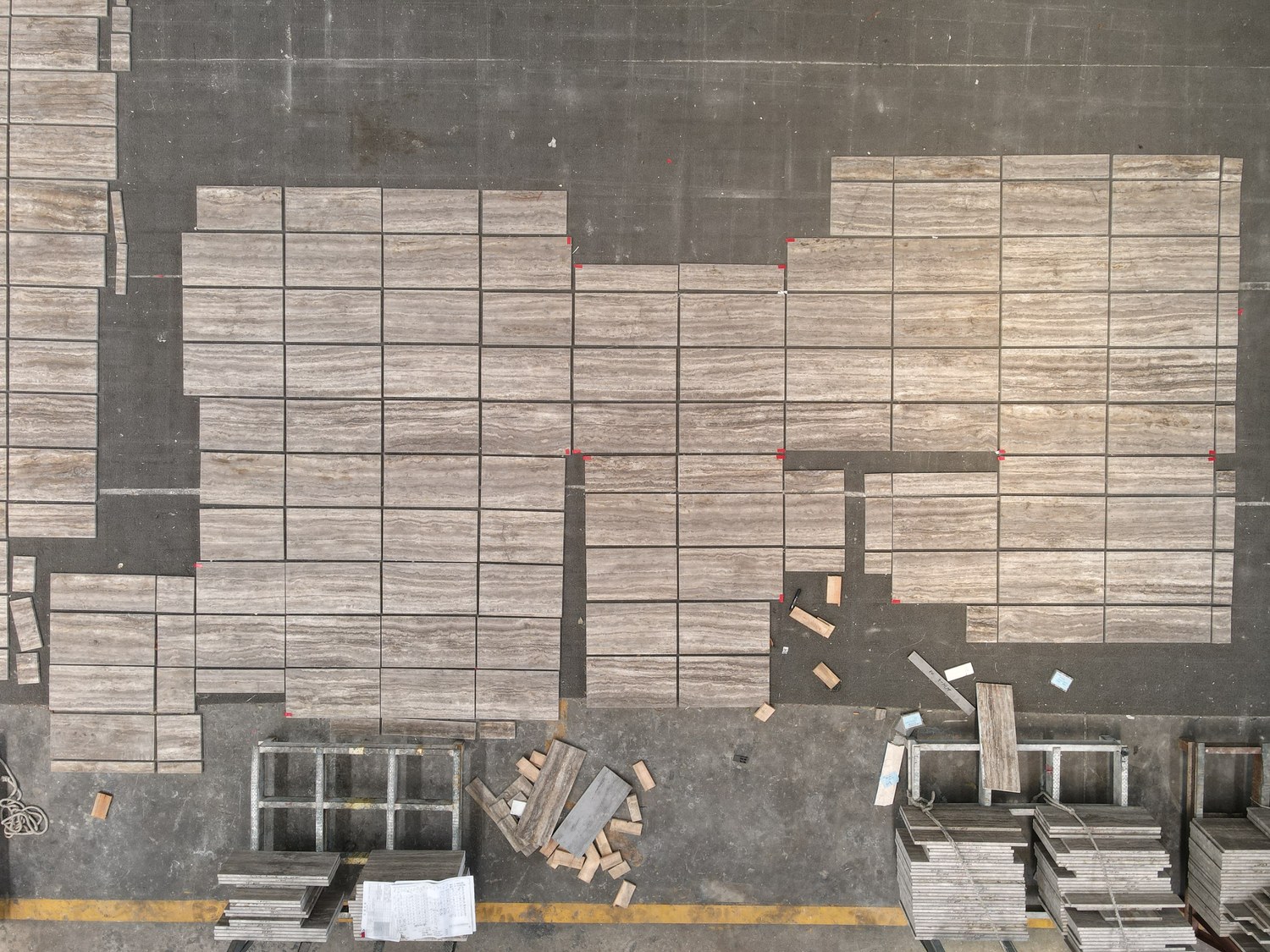
Silver Travertine, checked field by field
Closest match: Silver Travertine, vein-cut — one of the most recognisable stones in the trade for its fine, straight linear grain. The tags mark sections checked against the reference sample as the run continued.
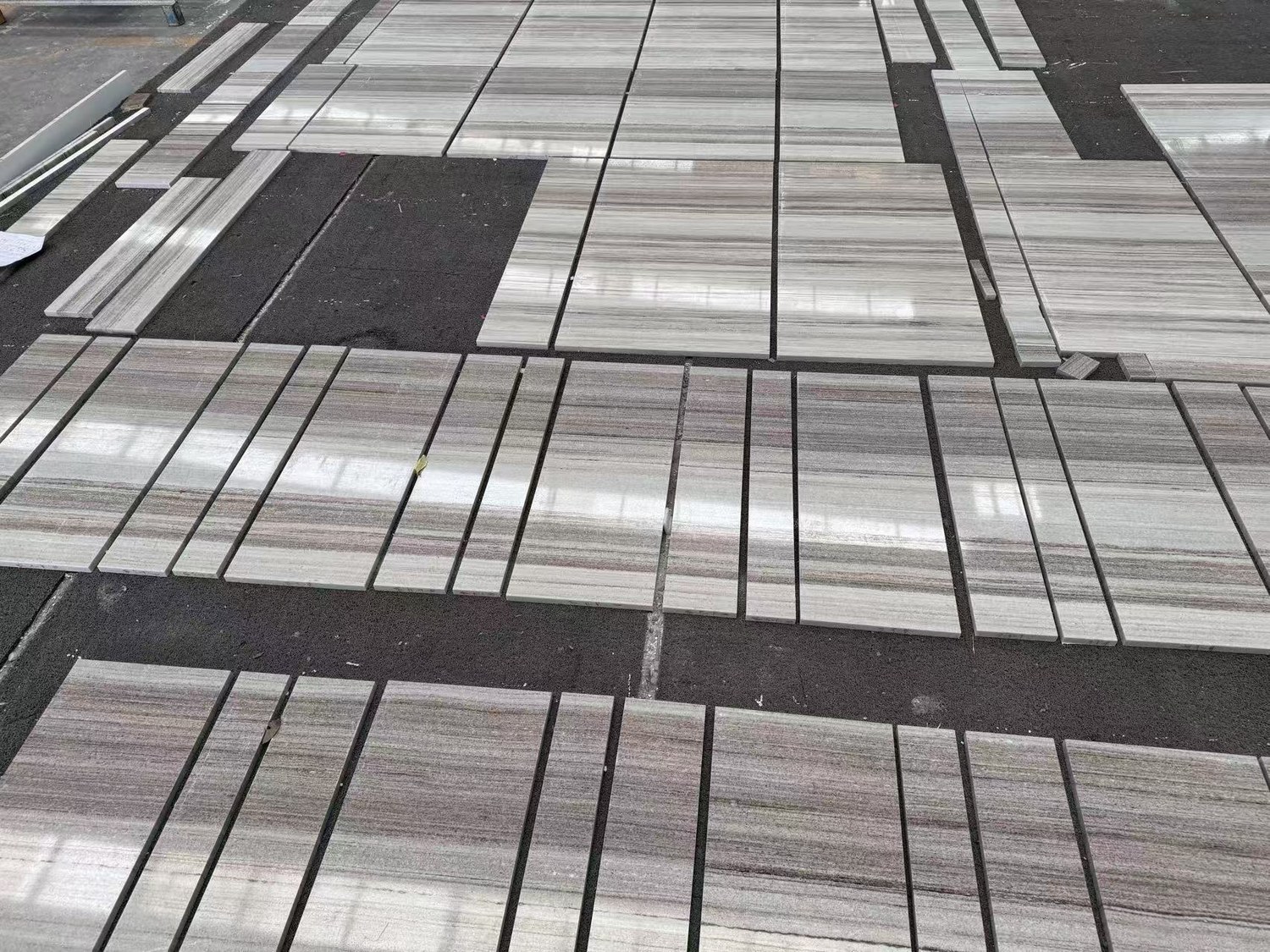
Polish brings the grain forward
The same Silver Travertine, polished. A gloss finish makes the linear grain and any tonal shift between pieces far more visible than a honed or filled surface would — which is why the finish is specified before the block is cut, not decided afterward.
Where travertine and limestone get specified.
Wall cladding, flooring, facades, pool surrounds, vanities and feature panels.
Almost every risk traces back to porosity.
Travertine and limestone's post-installation risks trace back almost entirely to porosity. Both absorb oil, wine, acid and cleaning products more readily than granite or dense marble, and sealing reduces but doesn't eliminate this — the wrong sealer can also change the surface colour permanently, so testing on an offcut before committing to the whole floor matters more here than with most other stone types.
Where these stones are bedded onto a cementitious substrate or set into a wet-set exterior application, salts can migrate to the surface as efflorescence — usually a bedding and moisture issue rather than a defect in the stone, though the stone gets blamed regardless. In cold climates, absorbed water expands as it freezes, and freeze-thaw cycles are the reason travertine and limestone are used far more often on covered or interior surfaces than fully exposed exterior ones.
Filled holes are the other long-term risk specific to travertine: a factory fill that looked complete at installation can shrink, discolour or pop out years later under foot traffic or freeze-thaw, exposing the natural cavity underneath. This isn't a reason to avoid the material — it's a reason to agree what's filled, with what, and who's responsible for re-filling later, before the project ships.
The other five stone families.




Not sure whether the stone you've chosen suits the application?
That question is cheaper to answer now than after the container arrives. Send the material reference, the application and the environment, and we'll tell you what we'd want to check.