Landscaping Stone
Judged less on how it looks and more on whether it survives the environment it's going into.
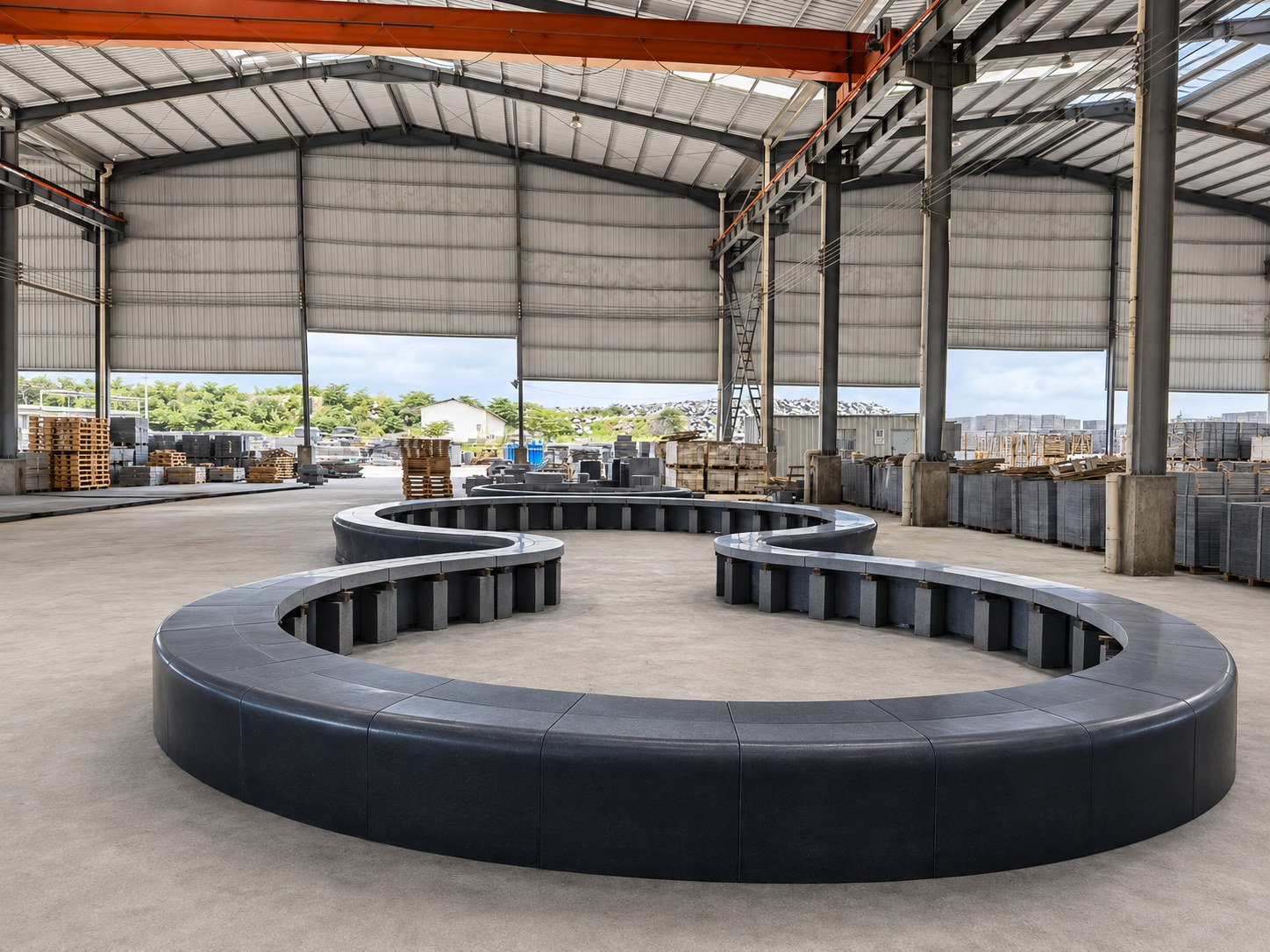
The question is rarely about colour first.
Landscaping stone covers a wide range of material — basalt, volcanic stone, and the dense granites shown on this page — but the buyer's question is rarely about colour or pattern first. It's whether a piece that sits outdoors, in full weather, under foot and vehicle traffic, for decades, will still look and perform the way it did on day one.
That shifts what actually matters in sourcing: porosity and density more than colour matching, dimensional consistency across hundreds of identical pieces more than the character of any single piece, and how the material survives packing and shipping more than how it photographs in the factory.
Five checks, and what each one is actually judged against.
Porosity and density
Density and absorption are checked against the destination climate before the order proceeds — a stone that's fine in a warm, dry landscape is not automatically fine somewhere with hard winters and repeated freeze-thaw cycles.
Dimensional control across large quantities
Every piece in a run is checked against the same reference dimension, not just the first sample approved. Landscaping projects install hundreds of matching units, and a small tolerance drift compounds across the whole run.
Slip resistance
Finish is checked for slip resistance appropriate to the application. Flamed and bush-hammered finishes are specified for pool surrounds and public paving precisely because polished stone becomes dangerous wet.
Surface reaction and colour change
Colour stability under sun, water and de-icing salt is checked against the material's known behaviour, not assumed. Some granites and basalts genuinely don't change; others discolour within a season.
Packing density and breakage risk
Packing method is agreed before production, not improvised at the dock. Landscape stone is heavy, awkward, and one of the categories most commonly damaged in transit when crated the wrong way.
Four granites, four different jobs to do outdoors.
Cambodia Bluemist and Salt and Pepper, Brazil's California Gold, and China's Wuhan G603 — cut, textured and checked before crating.
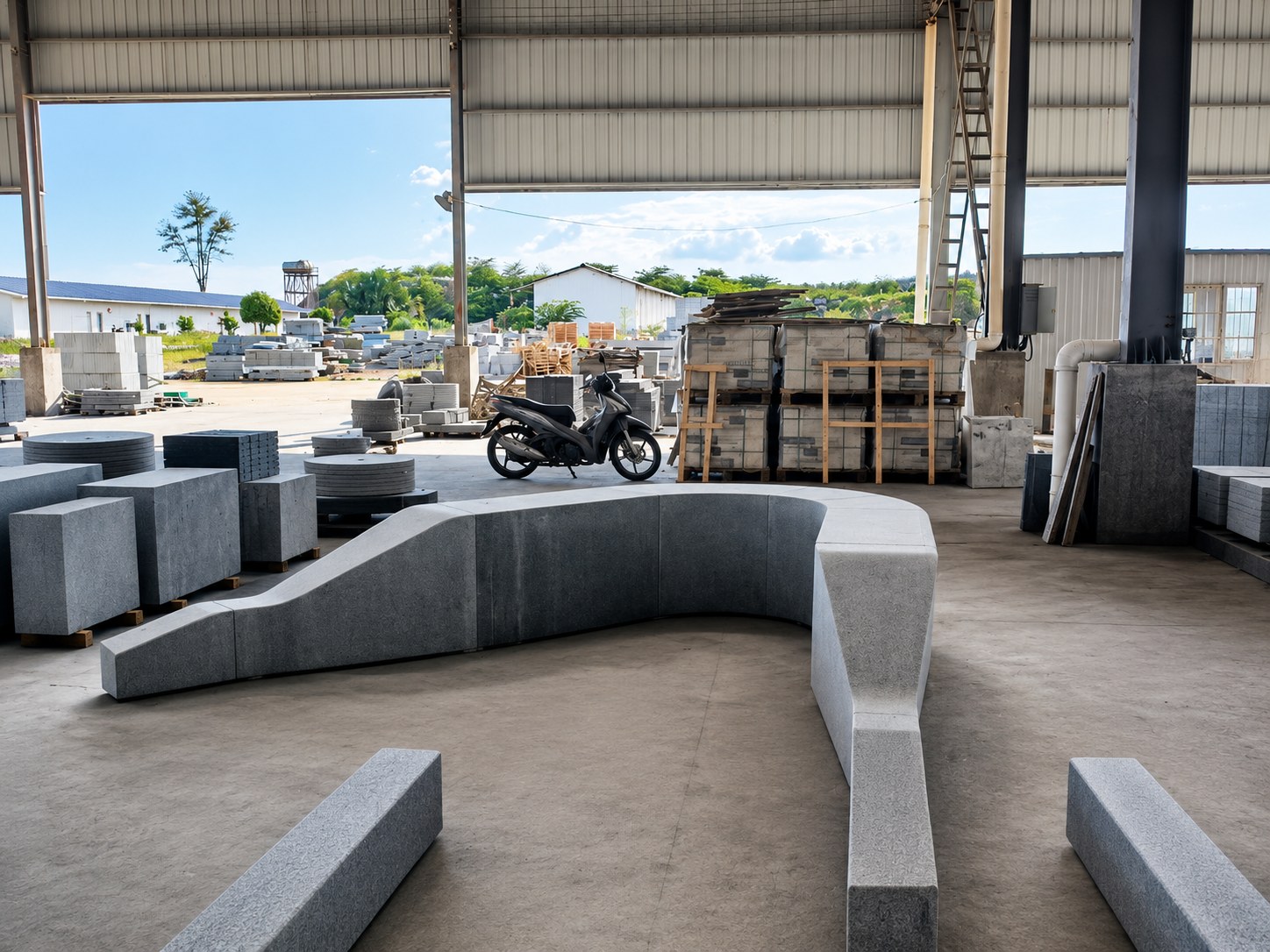
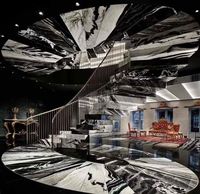
Cambodia Salt and Pepper Granite, cut to a sculptural profile
The classic black-and-white speckled granite, here cut into a sculptural ramped bench form. Flamed and bush-hammered sections give the walking surface grip that a polished finish wouldn't.
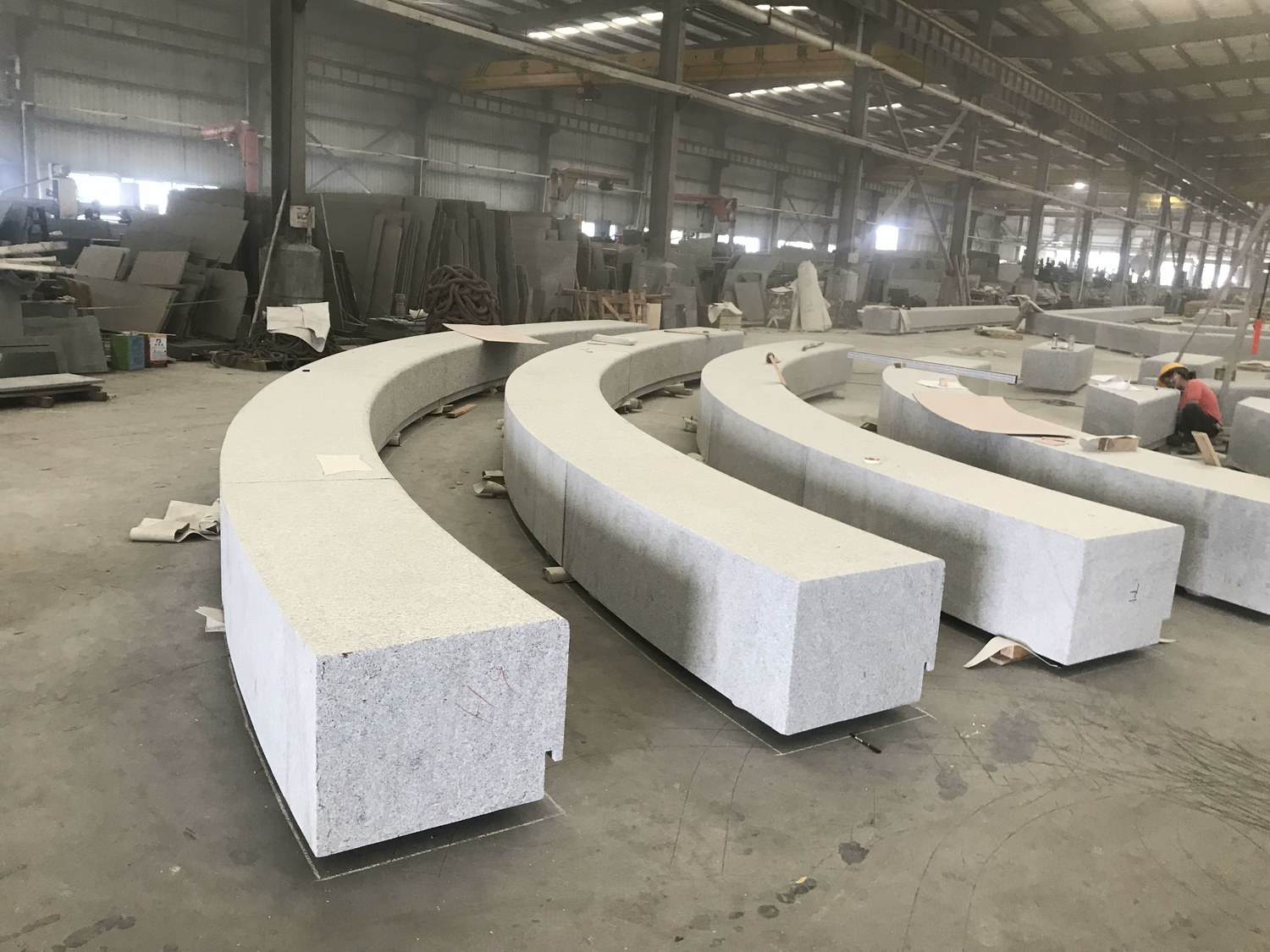
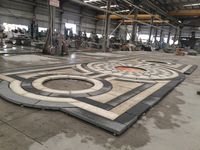
California Gold Granite (Brazil), curved paving units
A Brazilian granite, cut into curved bench sections and finished with a textured surface for outdoor grip. Each curved segment has to match its neighbours in radius and finish, not just colour.
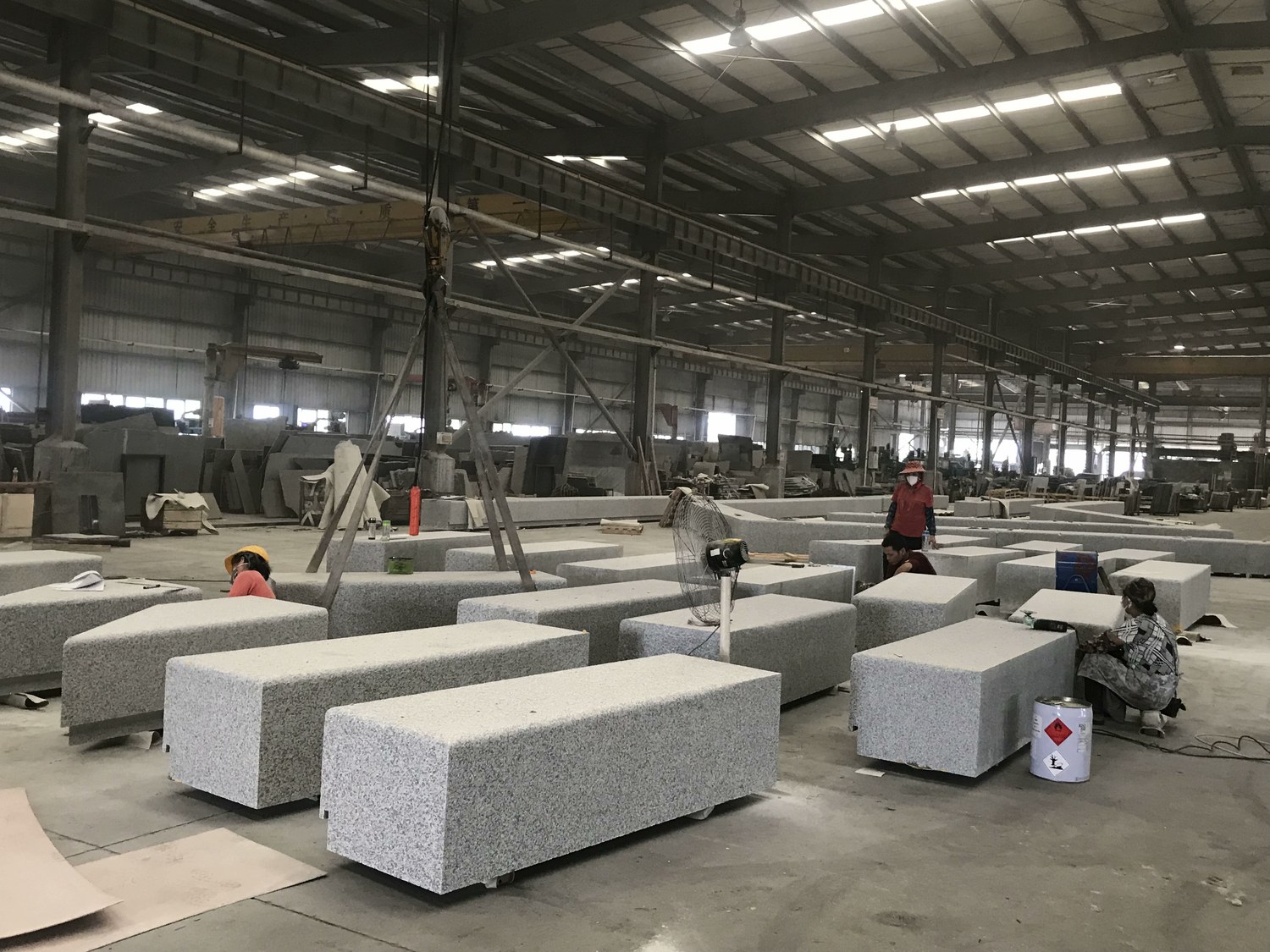
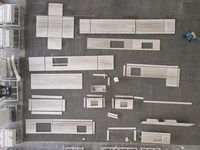
Wuhan G603 Granite (China), the volume workhorse
A light grey granite from Wuhan, China — one of the most widely exported landscaping granites for its consistent supply and predictable behaviour. Units are checked and finished in batches, with workers confirming surface and edge condition piece by piece before packing.
Where landscaping stone gets specified.
Paving, kerbs, steps, cobbles, pool surrounds, retaining walls and hard landscape.
The risks concentrate on exposure, not on the stone failing outright.
In cold climates, absorbed water expands as it freezes, and repeated freeze-thaw cycles are what actually determine whether paving, kerbs and steps survive years of exposure — not appearance or even initial density figures alone.
Slip resistance also isn't fixed for life: flamed and bush-hammered textures wear smoother under years of foot traffic, and a surface that met specification at installation may need re-testing or re-texturing well before the stone itself shows any other sign of age.
Where units are bedded and jointed for paving, the bedding system, movement joints and drainage falls decide as much of the long-term outcome as the stone selection did. None of this argues against natural stone outdoors — it argues for agreeing the finish, the bedding detail and the destination climate before the material ships, not after it's installed.
The other five stone families.
Not sure whether the stone you've chosen suits the application?
That question is cheaper to answer now than after the container arrives. Send the material reference, the application and the environment, and we'll tell you what we'd want to check.