Fabricated Work
Where the stone stops being a material and becomes a component.
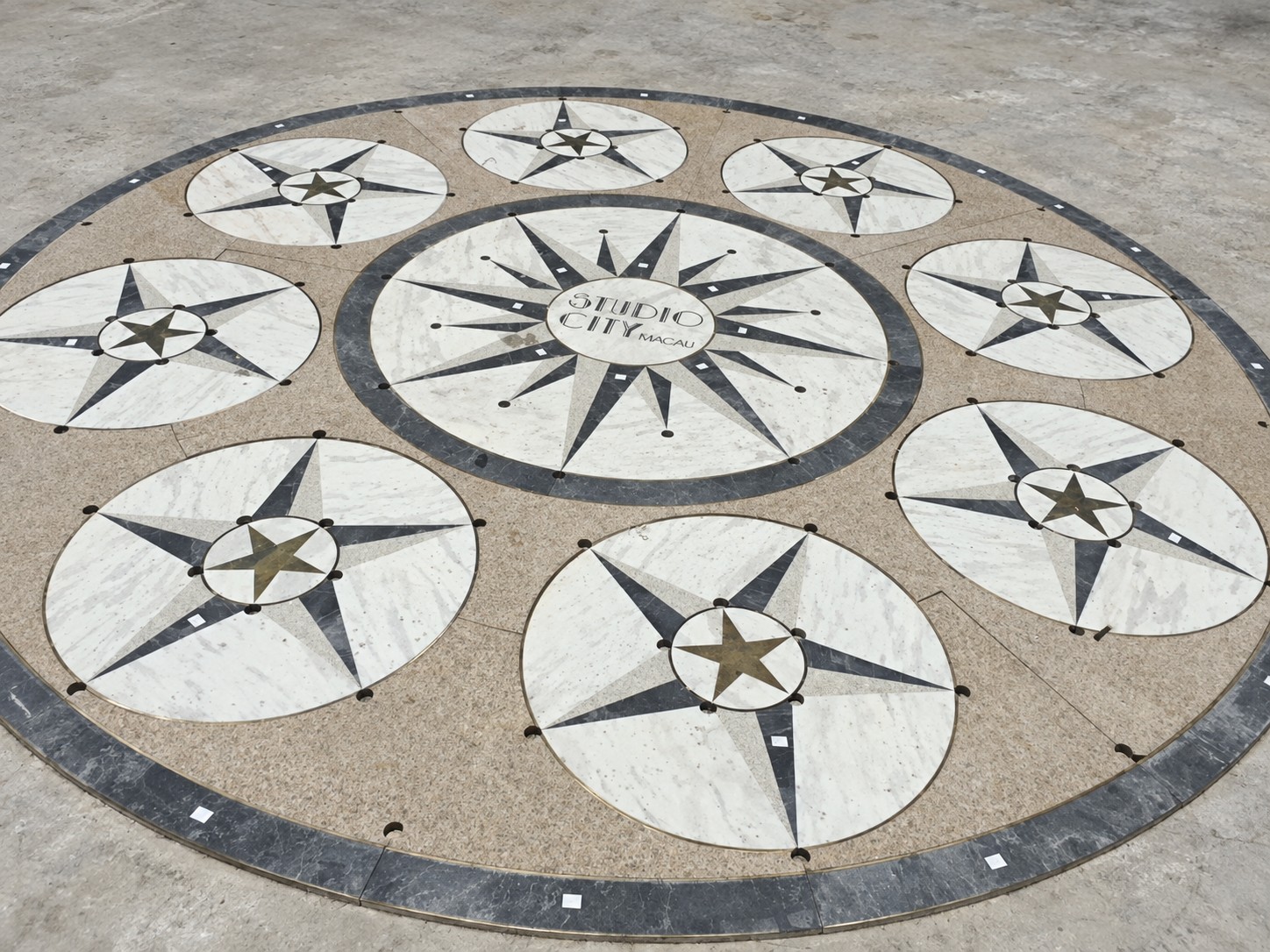
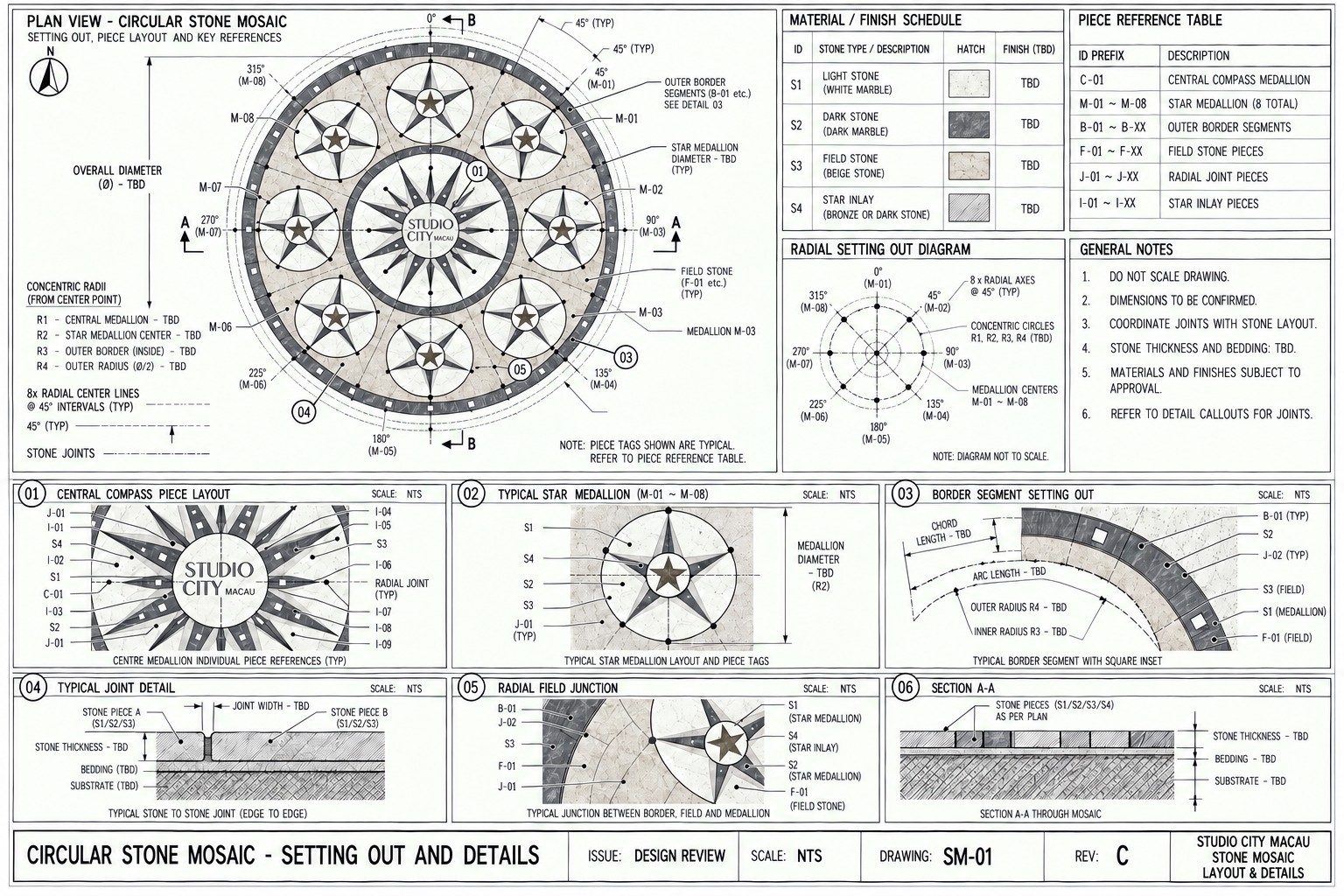
Setting-out logic, mapped from the finished piece
A setting-out drawing for the Studio City medallion floor — radial axes, piece references, material schedule and joint details, mapping how the piece is organised from the finished installation.
Once you're here, the drawing matters more than the stone.
Fabricated work covers medallions, radial inlays, engraved memorials, dimensional lettering and anything else where the piece is unique rather than one of thousands cut the same way. Once you're here, shop drawings, tolerance and sequence matter more than the stone species itself — and a mistake is expensive precisely because each piece can't simply be swapped for another identical one.
A waterjet medallion with two hundred pieces, a curved memorial bench with engraved text that has to read correctly once assembled, or a set of individually cut letters that spell a name across a plaza — all of these live or die on the shop drawing being right before the first cut is made, not on how good the stone looks in isolation.
Five checks, and what each one is actually judged against.
Shop drawings and templates
Shop drawings and templates are reconciled against actual site dimensions before cutting starts, not assumed accurate from an architect's plan. A medallion or memorial that's perfect on paper still fails if the site measurement it was based on was wrong.
Tolerance stack-up
Tolerance is tracked across the whole assembly, not piece by piece. Individually accurate pieces can still fail to close a circle or align a curve once the small errors in each one accumulate across dozens of pieces.
Edge profiles, cutouts, drainage falls and anchoring
Edge profiles, mitred corners, drainage falls and anchoring provisions are checked against the actual installation detail, not a generic standard. A drainage fall that's a few millimetres off across a large medallion means standing water on site.
Waterjet and CNC work
Inlay, medallions and radial joints are checked for how the circle actually closes, not just how each segment measures individually. This is where a design that looks simple on screen turns out to be difficult in stone.
Numbering, layout drawings and crating
Every piece is numbered against a layout drawing before it's crated, so the installer on site can find the right piece for the right position without guessing from memory.
From a branded medallion to a public memorial.
A radial medallion closing its circle, a full order checked before shipment, and a curved memorial with engraved signage, benches and lettering.
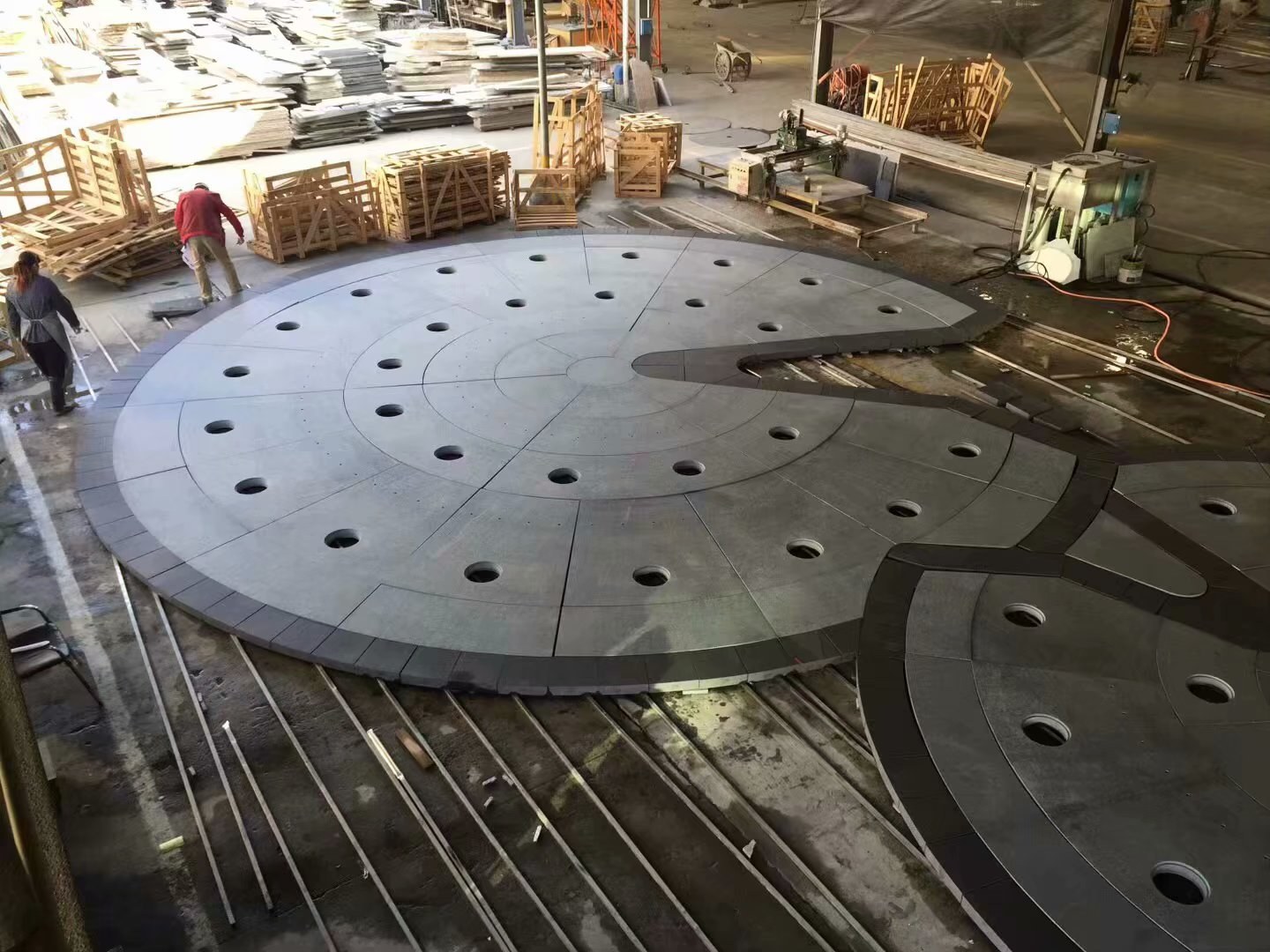
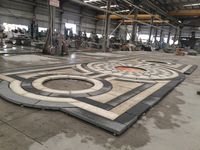
A radial medallion, dry-fitted before packing
A large circular paving medallion dry-laid on rails inside the factory, with drainage holes pre-drilled into position. Laying out the full circle before crating is the only way to confirm it actually closes as one continuous pattern, not several wedges that don't quite meet.
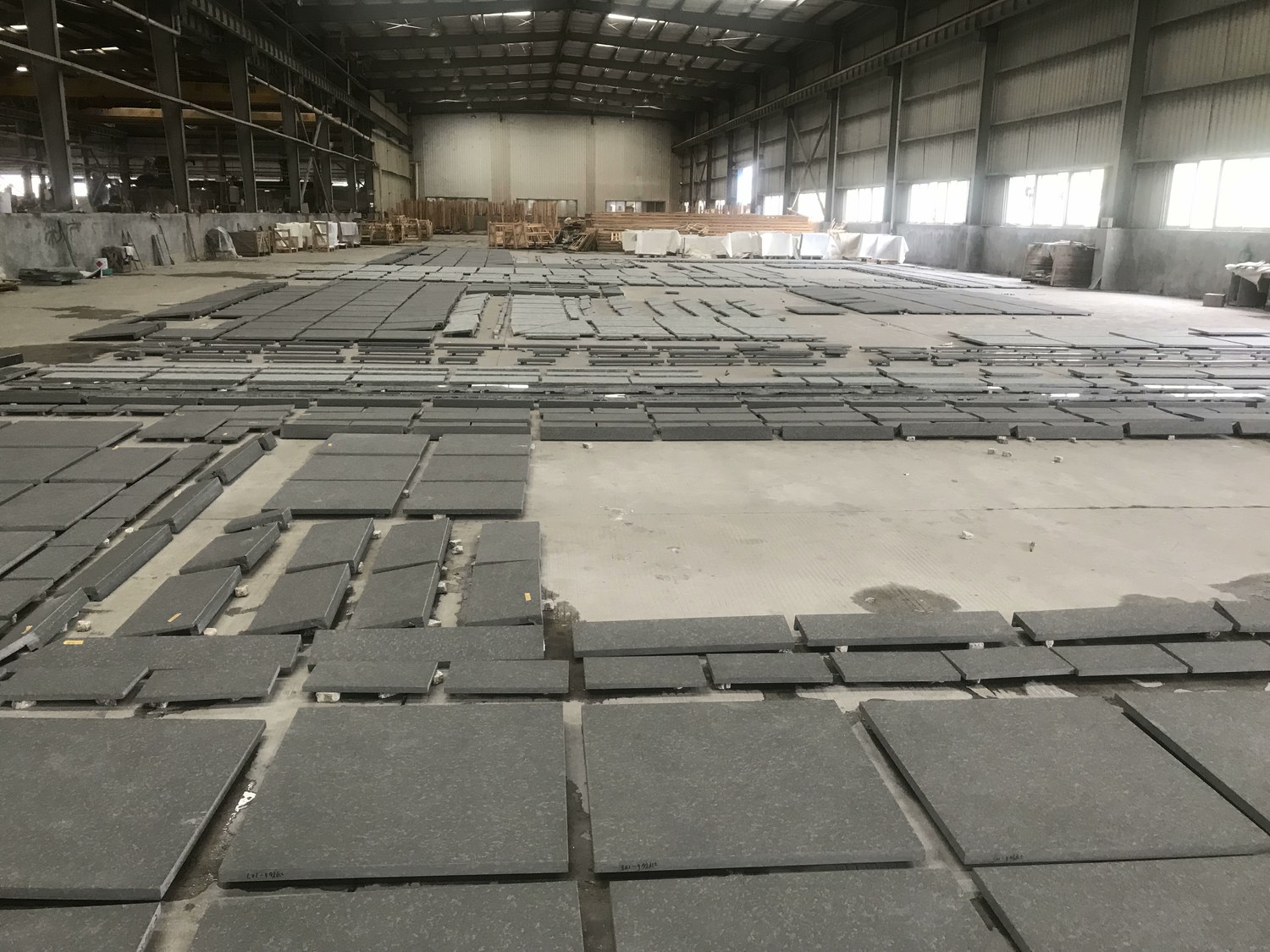
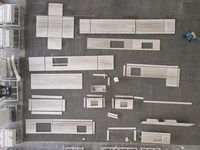
A full order, checked on the floor before it ships
Hundreds of finished pieces from the same order, laid out across the factory floor for a final check before packing — batch consistency and finish confirmed across the whole quantity, not a sample crate.
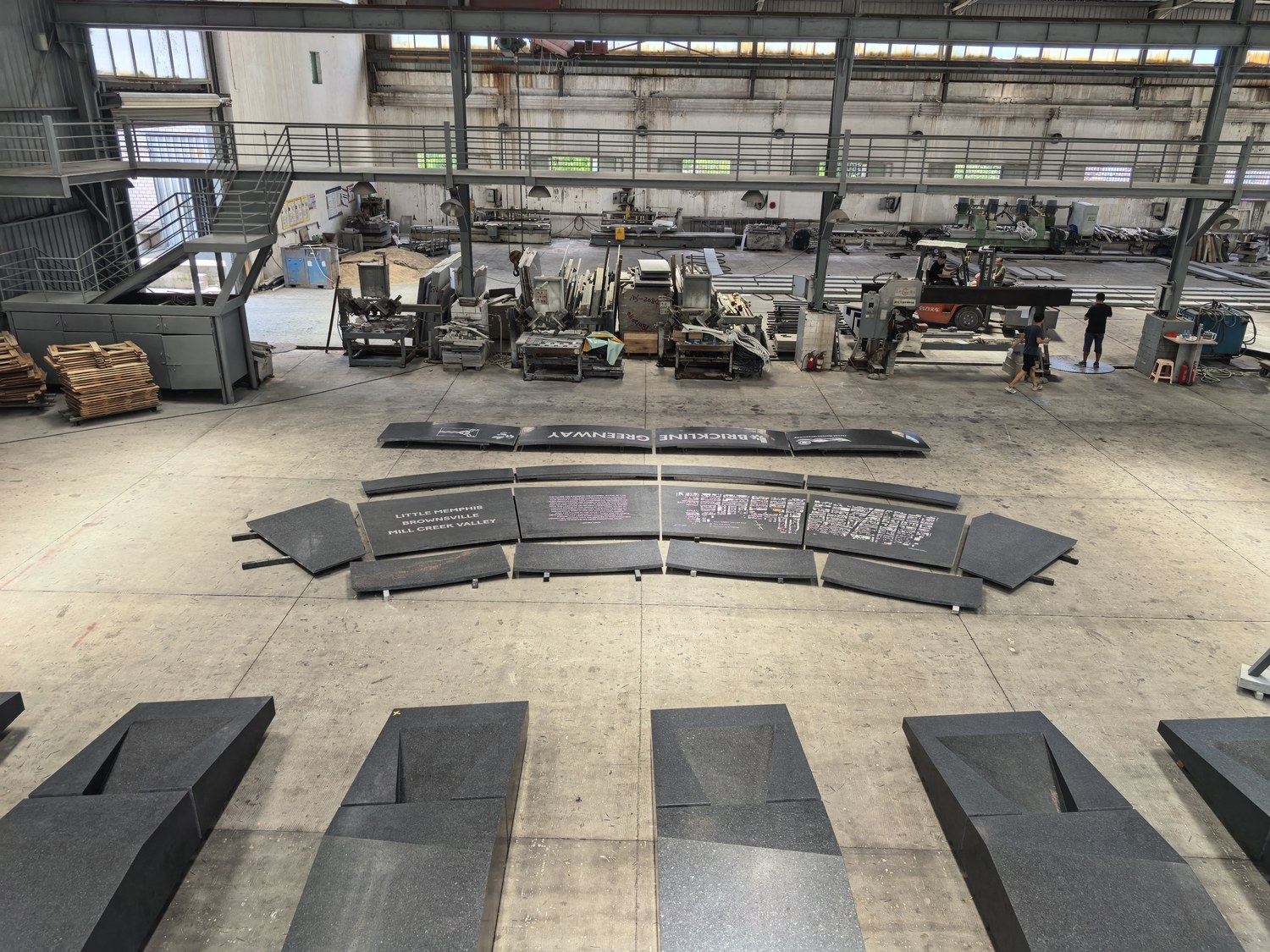
A public memorial, engraved and curved to plan
Curved granite signage panels for a public greenway memorial — engraved maps, place names and community quotes, cut to follow the arc specified in the landscape design. Text has to read correctly once every curved segment is installed in sequence, not just on the individual piece.
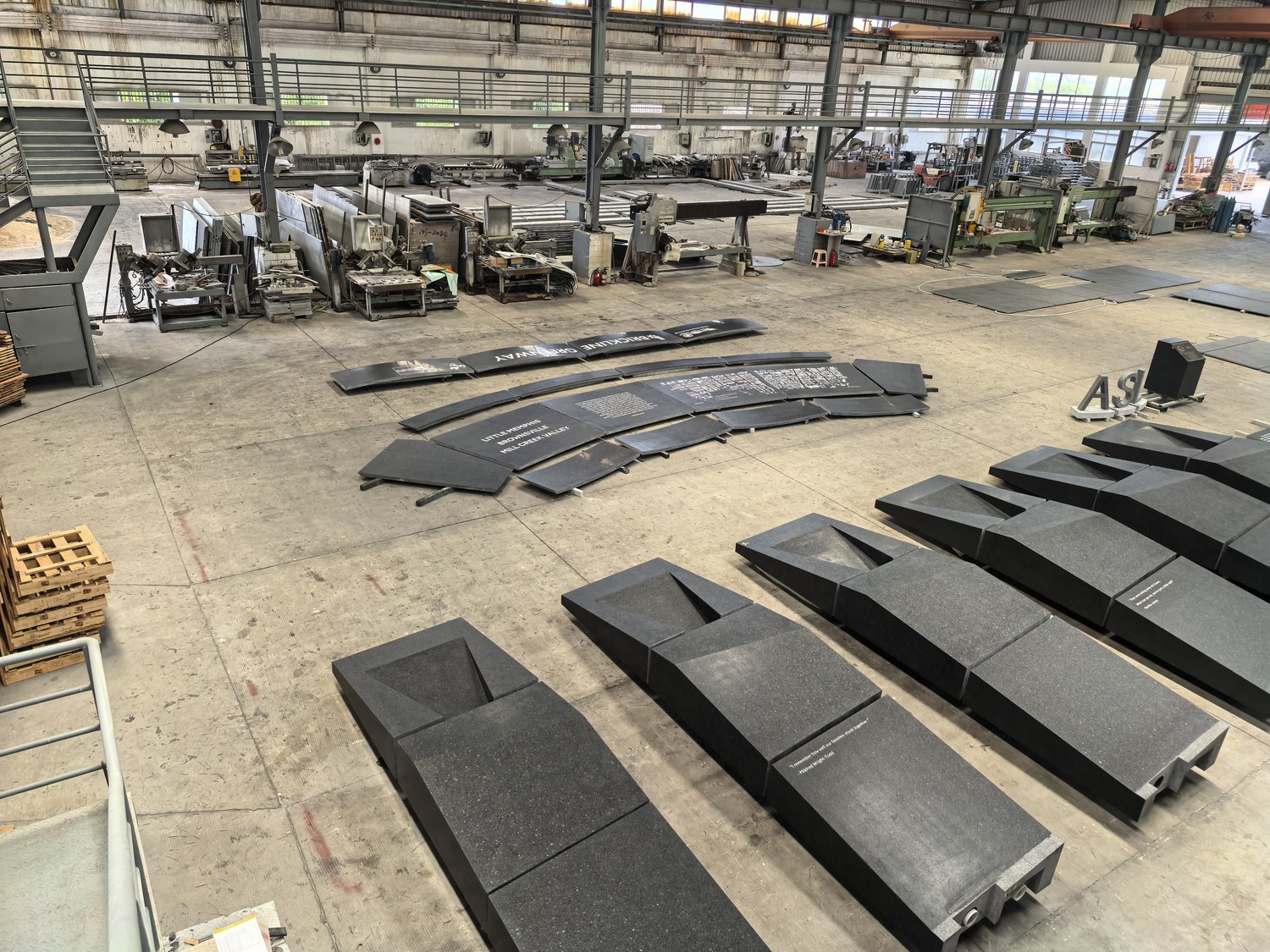
Sculptural bench forms and dimensional lettering
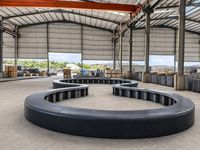
Angular granite bench forms carved with community quotes, alongside individually cut dimensional letters staged for a separate installation. Each bench's carved recess and angled faces are cut to the same shop drawing as its neighbours, so the set reads as one design rather than assorted pieces.
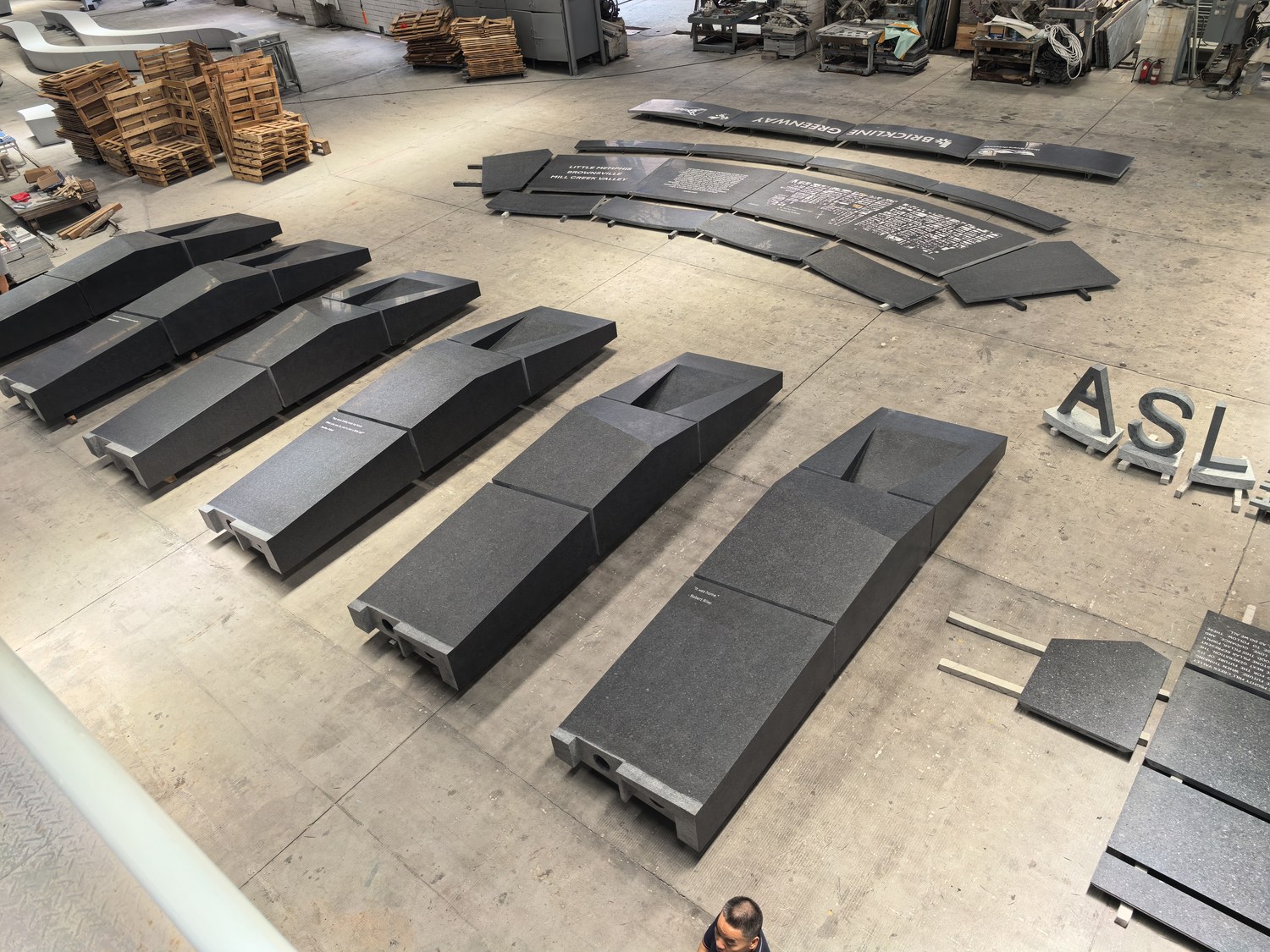
The whole memorial, staged before shipment
The complete set of curved signage, engraved benches and lettering, laid out together in the factory for a final check against the layout plan before crating — confirming the pieces read as one coherent memorial, not a collection of unrelated stone.
Where fabricated work gets specified.
Countertops, vanities, basins, bathtubs, medallions, carved elements, columns and cut-to-size assemblies.
The risks concentrate on the joints and the assembly, not a single piece.
Fabricated work's post-installation risks concentrate on the joints and the assembly, more than on any single piece failing. Anchoring, movement joints and the bedding system decide whether a radial medallion or a curved bench stays aligned over years of thermal expansion and contraction — a detail that has to be agreed with the installer before the pieces ship, not improvised on site.
Engraved and infilled text — names, quotes, wayfinding information — is also exposed to years of foot traffic and weather. The infill material and its depth decide how long the text stays legible before it needs re-cutting or re-filling, and that's a decision made at the fabrication stage, not something correctable afterward without redoing the work.
Where a piece sits outdoors, the same freeze-thaw and drainage considerations that apply to landscaping and paving stone apply here too — a beautifully fabricated medallion with the wrong drainage fall will hold water and suffer for it, regardless of how well each individual piece was cut.
The other five stone families.

Planning a fabricated or custom stone piece?
That question is cheaper to answer now than after the container arrives. Send the shop drawing, the application and the environment, and we'll tell you what we'd want to check.